
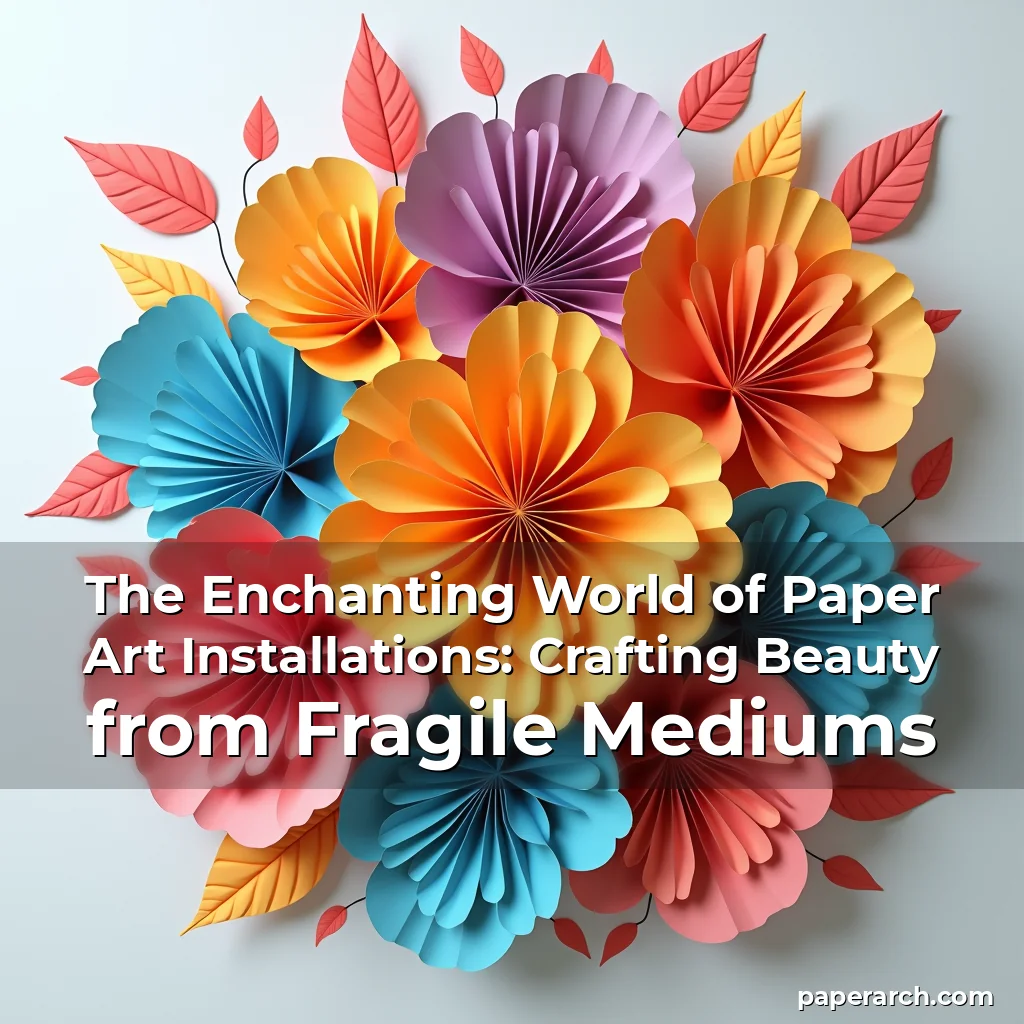
The Enchanting World of Paper Art Installations: Crafting Beauty from Fragile Mediums
Paper art installations have emerged as a captivating fusion of creativity, engineering, and environmental consciousness. These intricate creations transform ordinary sheets of paper into awe-inspiring structures that challenge perceptions of fragility and strength.
From towering origami sculptures to delicate papier-mâché landscapes, artists around the globe are redefining what paper can achieve. This medium’s versatility allows for both minimalist elegance and maximalist complexity, making it an ideal canvas for artistic innovation.
The Evolution of Paper as an Artistic Medium
Paper has been integral to human expression since its invention over two millennia ago in ancient China. Early uses were primarily utilitarian—writing surfaces and packaging—but by the Tang Dynasty, paper had become a vehicle for artistic experimentation.
During Japan’s Edo period, origami evolved beyond simple folding techniques into complex geometric forms. This historical progression laid the foundation for modern paper art installations that push technical boundaries while maintaining aesthetic appeal.
The Industrial Revolution brought new possibilities through mass production of paper stock, enabling artists to work with consistent materials at scale. However, contemporary creators often seek out handmade papers for their unique textures and sustainability credentials.
- Historical roots: Paper’s journey from practical material to artistic medium spans centuries of cultural development
- Technological shifts: Modern advancements in printing and material science have expanded creative potential
Today’s paper artists balance tradition with technology, using laser cutters and digital design tools alongside traditional handcraftsmanship. This synthesis creates works that honor history while embracing future innovations.
Innovative Techniques in Contemporary Paper Art
Modern practitioners employ diverse methods to manipulate paper, transforming flat sheets into three-dimensional wonders. Laser cutting enables precise patterns across various thicknesses, while kirigami introduces strategic cuts for dynamic movement.
Digital fabrication techniques such as CNC routing allow for complex geometries previously unimaginable in paper form. Artists combine these technologies with hand-folding techniques to create hybrid pieces that merge machine precision with human touch.
Layering techniques play a crucial role in building depth and dimensionality. Multiple translucent layers can create optical illusions when viewed from different angles, adding interactive elements to static installations.
Some artists incorporate natural elements like seeds or plant matter into their constructions, creating ephemeral works that evolve over time. This approach highlights nature’s role in shaping artistic expressions.
The Science Behind Paper Engineering
Structural integrity is paramount in large-scale paper installations. Engineers calculate load distribution and stress points to ensure stability without compromising visual impact. Mathematical principles guide the creation of self-supporting arches and vaulted ceilings made entirely of paper.
Material scientists study paper’s tensile strength under varying humidity conditions. This knowledge helps artists select appropriate fibers and coatings for outdoor installations where weather resistance becomes critical.
A recent MIT study demonstrated how corrugated cardboard could be engineered to support weights exceeding 600 pounds through clever structural arrangements. Such findings inspire new approaches to monumental paper architecture.
These scientific considerations don’t detract from artistic vision—they enhance it by expanding the physical limits of what can be achieved with paper as a medium.
Environmental Impact and Sustainability Practices
Eco-conscious artists prioritize sustainable sourcing and responsible disposal practices. Recycled paper stocks reduce waste streams while preserving the tactile qualities that make paper appealing as an art medium.
Biodegradable adhesives and non-toxic dyes align with green initiatives, ensuring artworks can return safely to the environment after exhibitions. Some installations even decompose naturally, becoming part of ecological cycles rather than landfill contributions.
Water-based inks and soy-based glues minimize chemical exposure during both creation and deconstruction phases. These choices reflect a growing awareness among artists about their environmental footprint.
Creative reuse of discarded materials—from newspaper clippings to shipping pallets—demonstrates resourcefulness while challenging notions of value inherent in everyday objects.
Famous Paper Art Installations Around the World
Kazuhiko Hachiya’s iconic paper sculpture at Tokyo’s Ginza Gallery features over 8 million folded pieces arranged in cascading waves. The installation required meticulous planning and weeks of labor to complete.
British artist Chris Beetles created a massive 9-meter-high paper tree for London’s Royal Academy exhibition. Constructed from thousands of individual leaves, each leaf was hand-painted before being assembled into the final structure.
Japanese artist Akira Nakamura’s “Paper Mountain” installation used 30 tons of recycled paper to construct a life-sized mountain range inside Kyoto’s Nishijin Textile Museum. The project took four years to complete and remains a testament to paper’s sculptural potential.
These landmark works showcase the incredible scale achievable through dedicated craftsmanship and innovative engineering solutions applied specifically to paper media.
The Role of Technology in Advancing Paper Art
Computer-aided design software allows artists to visualize complex structures before committing to physical construction. Digital modeling ensures efficient use of materials and minimizes errors during assembly processes.
Laser engraving capabilities enable fine detailing on otherwise plain surfaces, opening up new avenues for texture and pattern exploration. This technique complements traditional hand-crafting methods rather than replacing them.
Augmented reality applications now allow viewers to experience layered dimensions of paper installations digitally, enhancing interactivity without altering the physical artwork itself.
Such technological integrations expand accessibility while maintaining the core essence of manual skill required in paper artistry. They also facilitate remote collaboration between international artists working on shared projects.
Community Engagement Through Paper Art
Making paper art accessible to wider audiences involves educational programs and hands-on workshops. Community centers often host sessions teaching basic origami folds that lead to collaborative mural projects.
School curricula increasingly include paper arts as a cross-disciplinary tool combining math, science, and creative writing skills. Students learn geometry through constructing polyhedrons and develop storytelling abilities via book-making activities.
Public installations invite participatory engagement, allowing visitors to add their own folded components to evolving artworks. These interactive elements foster collective ownership and deepen emotional connections with the medium.
Artists frequently partner with local businesses to source reclaimed materials, strengthening community ties while promoting eco-friendly consumption habits through tangible examples.
Challenges and Opportunities in Paper Art Creation
Preserving fragile paper works presents significant challenges, especially in humid environments where mold growth threatens long-term viability. Conservation experts develop specialized storage solutions to mitigate these risks.
Transportation logistics require careful planning due to paper’s susceptibility to damage during transit. Customized packing strategies protect delicate components while meeting logistical requirements for gallery shipments.
Despite these hurdles, emerging markets present exciting opportunities. Pop-up galleries in urban spaces provide platforms for experimental works that might not find space in traditional museum settings.
Virtual reality experiences offer alternative ways to display paper art globally without risking physical degradation, opening new frontiers for appreciation and education.
Conclusion
Paper art installations represent a remarkable intersection of aesthetics, engineering, and environmental responsibility. Their ability to captivate audiences lies in the paradox they embody—the transformation of something seemingly frail into enduring masterpieces.
As we continue exploring this fascinating field, let us remember that every fold contains possibility. Whether you’re an aspiring creator or simply an admirer, there’s always room to discover beauty in the simplest of mediums.
“`