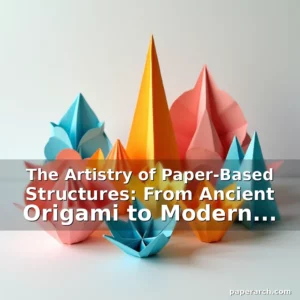

The Art and Science of Paper-Based Structures: Innovations, Techniques, and Cultural Significance
Paper-based structures represent an intersection of artistry, engineering, and cultural heritage, offering a versatile medium for creative expression and functional design. From ancient origami traditions to modern architectural models, these structures continue to captivate minds across disciplines.
This exploration delves into their historical roots, technical applications, artistic possibilities, environmental benefits, educational value, and future innovations—revealing why they remain relevant in today’s rapidly evolving world.
Historical Roots of Paper-Based Structures
The origins of paper-based structures trace back thousands of years, deeply embedded in human history. Ancient civilizations used paper not only as writing material but also as a canvas for intricate designs and structural experimentation.
In China, where paper was invented around 105 AD by Cai Lun, early forms of folded paper were used for ceremonial purposes. These practices laid the foundation for what would become complex techniques like origami and papercrafting.
Japan refined these methods over centuries, transforming simple folding into an elegant art form known as origami. This practice emphasized precision, patience, and aesthetic harmony, values still cherished today.
- Cultural Symbolism: In many societies, paper structures symbolize transience and impermanence, reflecting philosophical beliefs such as those found in Buddhism and Zen.
- Historical Documentation: Paper has been instrumental in preserving knowledge through manuscripts, scrolls, and architectural blueprints across various cultures.
Technical Applications in Modern Engineering
Modern engineers have embraced paper-based structures for their lightweight properties and adaptability in prototyping. These characteristics make them ideal for rapid model creation without compromising functionality.
Aerospace industries utilize thin paper composites reinforced with materials like carbon fiber to build scale models of aircraft components. Such prototypes allow designers to test aerodynamics efficiently before full-scale production.
Biomimetic designs inspired by natural patterns often incorporate paper-like materials to replicate biological functions at microscopic levels. This approach is pivotal in developing advanced medical devices and sustainable technologies.
Architectural firms employ digital fabrication tools combined with traditional paper crafting to explore innovative building solutions. By manipulating folds and layers, architects simulate spatial relationships within confined spaces effectively.
Artistic Expressions Through Paper Craft
Artists worldwide harness the versatility of paper to create stunning visual narratives and three-dimensional sculptures. Their works range from delicate origami pieces to elaborate pop-up books filled with interactive elements.
The fusion of technology with traditional crafts has given rise to new mediums like laser-cutting and 3D printing which expand creative boundaries while maintaining respect for age-old techniques.
Contemporary artists use layered paper constructions to comment on social issues, environmental concerns, and personal identity themes. These installations challenge viewers’ perceptions about fragility versus strength inherent in everyday objects.
International exhibitions showcase diverse interpretations of paper artistry, highlighting regional styles influenced by local customs and available resources. This diversity enriches global appreciation for handmade creations made purely from recycled or sustainably sourced papers.
Notable Artists and Their Contributions
Erik Demaine, renowned mathematician turned artist, explores geometric principles behind foldable shapes using algorithms developed alongside his research work. His collaborations blend mathematics with aesthetics seamlessly.
Kazuo Haga pioneered mathematical origami theory by applying geometry concepts onto practical folding instructions. His contributions paved ways for others interested in merging science with craft.
Suzanne Lee revolutionized eco-friendly fashion through her biodegradable fabric made entirely out of bacteria grown on cellulose derived from wood pulp. Although technically different than conventional paper arts, she shares similar ethos regarding sustainability.
These pioneers exemplify how cross-disciplinary approaches enhance both understanding and application domains related to working with paper as primary construction material.
Environmental Impact and Sustainability Practices
Paper-based structures offer significant advantages when considering ecological footprints associated with manufacturing processes compared to plastics or metals commonly used elsewhere.
Recycled paper products reduce demand for virgin fibers extracted primarily from trees contributing positively towards forest conservation efforts globally.
Biodegradability ensures minimal pollution after disposal since decomposing naturally instead of persistently polluting landfills or oceans unlike synthetic alternatives.
Companies promoting green initiatives increasingly favor packaging solutions involving corrugated cardboard boxes designed specifically for reusability aspects enhancing circular economy principles.
Educational Value in STEM Fields
Integrating paper-based activities into education systems enhances learning experiences particularly beneficial during hands-on projects requiring problem-solving skills development among students.
Origami-based lessons teach fundamental geometrical concepts visually making abstract theories tangible thus improving comprehension rates significantly especially amongst younger learners.
Hands-on engagement fosters creativity encouraging experimentation leading potentially toward careers rooted in fields such as architecture engineering robotics etcetera.
Teachers report increased student participation due largely because constructing physical models provides immediate feedback reinforcing theoretical understandings practically applicable later life scenarios.
Futuristic Trends Shaping Future Developments
Advancements in nanotechnology now enable scientists to manipulate individual molecules forming ultra-thin sheets capable supporting weight far exceeding expectations traditionally attributed solely heavier substances.
Smartpapers incorporating conductive ink circuits open avenues allowing electronic functionalities integrated directly onto flexible substrates useful potential wearables health monitoring devices etcetera.
Collaborative platforms connecting inventors researchers educators facilitate sharing ideas accelerating innovation cycles ensuring continuous progress benefiting wider communities involved.
As interest grows internationally collaborative events dedicated exclusively exploring intersections between digital fabrication traditional craftsmanship gain traction fostering inclusive environments nurturing emerging talents.
Preservation Challenges and Conservation Efforts
Despite enduring appeal paper remains vulnerable numerous threats including humidity light exposure pests deterioration factors affecting longevity archival quality essential documentation preservation needs addressed promptly.
Museums libraries institutions invest heavily protective measures employing climate controlled storage facilities specialized handling procedures preventing damage occurring accidental mishandling improper storage conditions.
Digital archiving complements physical copies providing backup ensuring accessibility even original documents degrade irreversibly over time due aging chemical reactions taking place internally.
Community driven restoration programs engage volunteers skilled individuals helping restore damaged items restoring lost stories contained therein revitalizing cultural legacies once fading memory.
Conclusion
Paper-based structures encapsulate rich histories profound impacts spanning multiple dimensions encompassing scientific explorations artistic endeavors educational pursuits ecological considerations forward looking visions shaping tomorrow’s landscapes.
Whether viewed simply decorative objects functional prototypes meaningful symbols conveying deeper messages each instance demonstrates incredible capacity transformational power held within humble sheet ordinary paper waiting unfold reveal hidden wonders.
“`

news is a contributor at PaperArch. We are committed to providing well-researched, accurate, and valuable content to our readers.