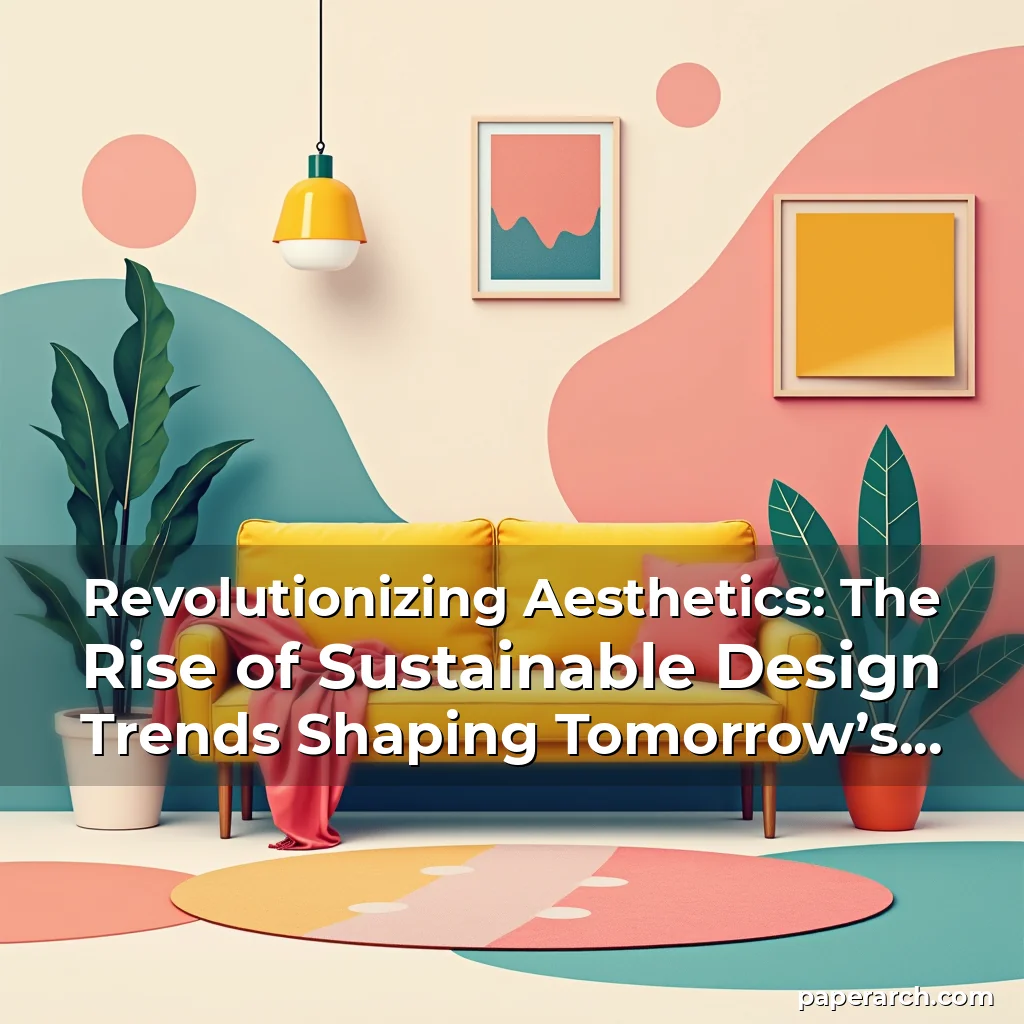
Revolutionizing Aesthetics: The Rise of Sustainable Design Trends Shaping Tomorrow’s Spaces
In an era defined by climate urgency and ecological awareness, sustainable design has evolved beyond mere buzzword status. It now represents a fundamental shift in how we conceptualize architecture, interior spaces, and product development.
This transformation reflects a collective commitment to harmonizing human habitation with planetary health. As designers reimagine functionality, they’re embedding sustainability at every stage of creation—from material sourcing to end-of-life considerations.
The Resurgence of Biophilic Design
Biophilic design is experiencing a renaissance as architects and interior designers recognize its dual benefit of enhancing occupant well-being while reducing environmental impact.
By integrating natural elements into built environments, this approach creates healthier indoor atmospheres that lower stress levels and boost productivity. Studies show occupants in biophilic spaces report improved concentration and creativity.
Nature-inspired features now dominate modern interiors, from living walls teeming with vegetation to strategically placed skylights maximizing daylight exposure.
Designers are embracing biomimetic principles, creating structures that mimic natural forms and functions. This includes building facades modeled after termite mounds for passive cooling or floor patterns inspired by fractal geometries found in forests.
- Bamboo Integration: Architects increasingly incorporate bamboo—a rapidly renewable resource—for structural components and decorative accents
- Water Features: Indoor ponds and fountains not only enhance aesthetics but also contribute to air purification and humidity regulation
- Natural Materials: Reclaimed wood, stone, and clay are being prioritized for their low embodied energy and timeless beauty
- Outdoor Connections: Expansive glass enclosures and terraces blur boundaries between indoor and outdoor spaces, fostering deeper environmental connection
Circular Economy Principles Redefining Material Use
The linear model of ‘take-make-dispose’ is giving way to circular economy frameworks that prioritize reuse, recycling, and regeneration of materials.
Sustainable design professionals are now working backwards from end-of-life scenarios, ensuring products can be disassembled, repurposed, or safely returned to the ecosystem.
Material passports are becoming standard practice, documenting component origins, properties, and potential second lives for buildings and furniture.
Companies are developing closed-loop manufacturing systems where old products become raw materials for new ones, significantly reducing landfill contributions.
Statistics Highlighting Circular Benefits
A recent EU study revealed that adopting circular practices could cut construction sector emissions by up to 60% by 2030.
Furthermore, businesses implementing circular models reported average cost savings of 28%, demonstrating economic viability alongside environmental gains.
Demand for reclaimed materials is surging, with markets for salvaged timber and steel experiencing annual growth rates exceeding 15% globally.
This shift is particularly evident in high-end residential projects where clients seek both luxury and sustainability credentials through curated vintage fixtures and artisan-crafted furnishings.
Innovations in Eco-Friendly Building Materials
Materials science breakthroughs are fueling a revolution in construction, offering solutions that balance performance with environmental responsibility.
Pioneering developments include self-healing concrete infused with bacteria capable of repairing cracks autonomously, extending infrastructure lifespan dramatically.
Engineered wood composites made from agricultural waste are replacing traditional lumber, providing durable alternatives with minimal deforestation impact.
Researchers are advancing carbon-negative concrete formulations that actively sequester CO₂ during production rather than emitting it.
- MycoWorks: Mycelium-based insulation offers exceptional thermal properties while decomposing harmlessly at end-of-use
- Hempcrete: This plant-derived composite provides superior breathability and moisture regulation compared to conventional insulation
- Recycled Aluminum: High-strength alloys produced from post-consumer scrap reduce mining demands and energy consumption
- Moss Facades: Living moss panels on building exteriors absorb pollutants and provide natural acoustic dampening
Energy-Efficient Design Strategies
Modern architectural practices emphasize holistic approaches to energy conservation that go far beyond simple LED lighting upgrades.
Building orientation plays a crucial role, with optimal placement maximizing natural ventilation and minimizing heat gain through strategic shading devices.
Dynamic façade systems featuring electrochromic glass adjust tint automatically to regulate interior temperatures and glare levels.
Intelligent HVAC networks learn occupancy patterns to optimize heating/cooling schedules, achieving significant energy savings without compromising comfort.
Green roofs and vertical gardens serve dual purposes by insulating buildings and managing stormwater runoff effectively.
Case Study: Passive House Certification
The Passive House standard demonstrates achievable energy efficiency targets through meticulous attention to thermal envelope integrity.
These ultra-low-energy homes achieve up to 90% reduction in space heating demand through continuous insulation, triple-glazed windows, and airtight construction.
Despite initial premium costs, lifecycle analysis shows payback periods typically under ten years through reduced utility bills.
Growing adoption across Europe highlights the feasibility of widespread implementation even in cold climates with advanced mechanical systems.
Water Conservation Through Smart Systems
Innovative plumbing technologies are transforming how we manage water usage in both residential and commercial settings.
Sensor-activated faucets combined with greywater recycling systems can reduce household water consumption by up to 40% annually.
Permeable pavements allow stormwater infiltration, replenishing groundwater reserves while preventing urban flooding.
Smart irrigation controllers analyze weather data to deliver precise amounts of water only when necessary, avoiding wastage from manual oversight.
Commercial buildings are installing waterless urinals and composting toilets to drastically cut potable water demands.
Modular Construction Revolutionizes Space Utilization
The rise of prefabricated modules enables unprecedented flexibility in spatial configurations while minimizing construction waste.
Interchangeable wall panels and adjustable joinery systems allow tenants to customize layouts according to evolving needs without demolition.
Office spaces designed around agile workstations promote efficient land use and adapt readily to changing workforce dynamics.
Data centers incorporating hot aisle containment strategies save millions in operational costs by improving airflow management.
Urban infill projects leverage modular units to maximize density without sacrificing livability or aesthetic appeal.
Fostering Social Equity Through Inclusive Design
Sustainability must encompass social dimensions, addressing accessibility challenges often overlooked in traditional green initiatives.
Universal design principles ensure that sustainable features remain usable by people of all abilities, including ramps with gentle slopes and tactile signage systems.
Eco-communities are incorporating community gardens and shared transportation hubs to foster social cohesion while reducing individual environmental footprints.
Public spaces integrated with renewable power sources demonstrate environmental stewardship accessible to everyone regardless of socioeconomic background.
Participatory design processes empower local communities to shape their environments, ensuring equitable distribution of sustainability benefits.
Leveraging Digital Tools for Environmental Impact Analysis
Advancements in computational modeling enable designers to quantify sustainability metrics accurately before physical implementation.
Building Information Modeling (BIM) software allows virtual testing of various design iterations to identify most environmentally responsible options.
AI algorithms predict maintenance needs and suggest modifications to prolong asset lifecycles, reducing replacement frequencies and associated environmental impacts.
Digital twins of existing structures help monitor real-time performance, identifying inefficiencies that can be addressed proactively.
Virtual reality simulations assist stakeholders in visualizing sustainability outcomes, facilitating informed decision-making about project directions.
Emerging Trends Shaping Future Sustainability Practices
Rapid technological progress continues to expand possibilities for sustainable design in unexpected ways.
Bioengineered materials derived from algae promise lightweight yet robust alternatives to conventional plastics, with inherent biodegradability advantages.
Self-powered sensors embedded in infrastructure collect data on structural health and environmental conditions without external electrical inputs.
3D printing with recycled feedstocks is enabling localized manufacturing, cutting down on transport-related emissions while producing customized components efficiently.
Neuroarchitecture research explores how spatial arrangements affect cognitive function and emotional states, informing healthier, more productive environments.
Blockchain technology facilitates transparent tracking of supply chains, verifying ethical sourcing claims for raw materials used in construction projects.
Conclusion
The evolution of sustainable design reflects our collective recognition of environmental limits and the urgent need for transformative change.
From biophilic integration to circular economies, these emerging trends offer pathways toward regenerative futures that nourish both people and planet.
As practitioners continue innovating, consumers play vital roles by supporting sustainable choices and demanding accountability from industry leaders.
Embracing these progressive design philosophies isn’t merely an option—it’s a necessity for securing resilient, thriving ecosystems for generations to come.